Think about the last time you discovered a brand on Instagram, visited their website to browse, then walked into their store and bought something. That smooth, connected journey? That is omnichannel marketing working exactly as it should.
We are living in a time where customers are everywhere – on their phones, on their laptops, inside physical stores, and scrolling through social media before bed. If your business only shows up in one place, you are quietly losing customers to competitors who are everywhere your audience already is. Understanding what is omnichannel marketing is no longer a luxury for big corporations. In 2026, it is the single most important growth lever for businesses of every size – from solo freelancers to growing startups to established brands.
This guide breaks it all down in simple language. No confusing jargon, no textbook theory – just clear, practical knowledge you can actually use.
What Is Omnichannel Marketing — The Real Explanation.
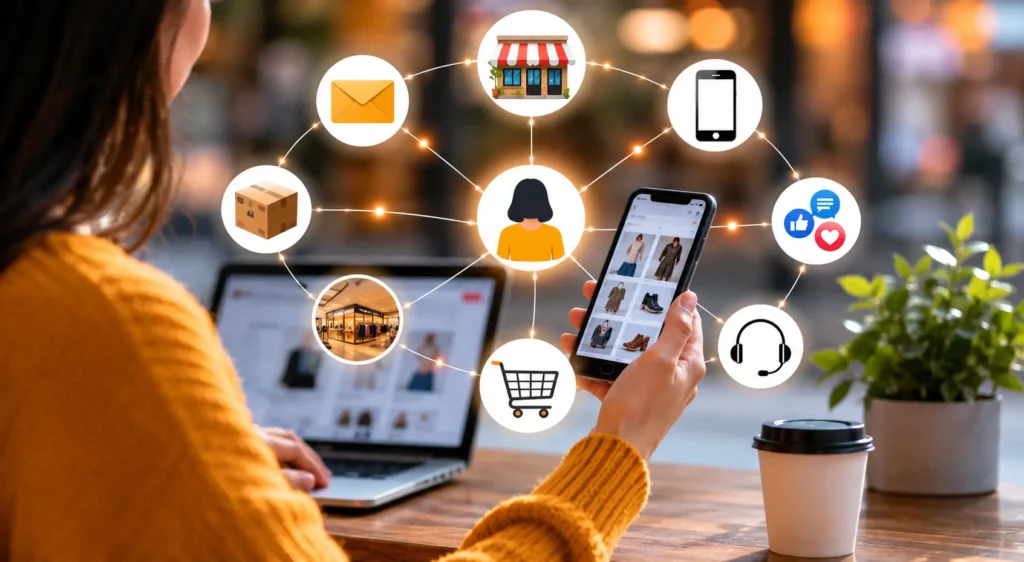
At its core, omnichannel marketing means delivering a consistent, connected customer experience across every platform and channel your business uses – whether that is your website, your Instagram page, your email newsletters, a physical store, WhatsApp, or even a mobile app. The word “omni” comes from Latin, meaning “all” or “every.” So omnichannel literally means reaching customers across all channels, not as separate experiences, but as one unified journey.
Here is the key difference most people miss: multichannel marketing means you are present on multiple platforms. Omnichannel marketing means all those platforms talk to each other. The customer’s data, history, and preferences follow them seamlessly from one touchpoint to the next. If someone adds a product to their cart on your website and later opens your app, they should see that same cart sitting right there. If they message you on Instagram and later call your store, your team should know who they are. That level of continuity is what omnichannel is all about.
In essence, omnichannel puts the customer – not the channel – at the center of every decision. It is less about technology and more about how your customer feels when they interact with your brand, no matter where that interaction happens.
Why Omnichannel Marketing Matters More Than Ever.
Customer behaviour has changed dramatically over the last few years. A 2024 study found that consumers use an average of six different channels before making a purchase decision. That means if your business is only active on two or three platforms – and those platforms are not connected – you are creating frustrating gaps in the customer experience. People notice those gaps, and they walk away. Here is why omnichannel marketing is now a non-negotiable part of business growth:
- It builds trust and brand consistency. When a customer sees the same tone, offers, and messaging whether they visit your website, open your email, or walk into your store, it signals that your business is professional and reliable. Inconsistency confuses customers and quietly erodes trust.
- It dramatically improves the customer experience. Nobody wants to repeat themselves – explaining their problem to three different people on three different platforms. An omnichannel approach means context travels with the customer, so every interaction feels personal and efficient.
- It increases sales and reduces drop-offs. When transitions between channels are smooth, customers are far less likely to abandon a purchase. A seamless journey from an Instagram ad to a product page to checkout removes friction at every step.
- It gives you richer data and insights. With all channels connected, you get a complete picture of how customers move through their buying journey. That data lets you make smarter decisions about where to invest your marketing budget and how to improve weak spots.
- It creates a genuine competitive advantage. Most small businesses are still operating in isolated silos. By implementing even a basic omnichannel strategy, you immediately stand out and pull ahead of competitors who have not made the shift yet.
The Key Channels That Make Up an Omnichannel Strategy.
When we talk about omnichannel marketing, we are really talking about weaving together several different types of customer touchpoints into one cohesive system. The channels you use will depend on your business type, audience, and resources – but understanding the main ones helps you decide where to start.
- Your Website: This is still the home base of any business. It should reflect the same brand identity, messaging, and offers that exist across every other channel. It is also where most purchase decisions get finalized.
- Social Media Platforms: Instagram, Facebook, LinkedIn, and YouTube are not just for brand awareness anymore. They are discovery engines, customer service platforms, and sales channels all in one. Each platform should feel like an extension of the same brand voice.
- Email Marketing: Email remains one of the highest-ROI marketing channels available. When connected to your other platforms, it becomes incredibly powerful — sending personalized follow-ups based on what a customer browsed, bought, or left behind in their cart.
- Physical Stores or Offline Touchpoints: For businesses with a physical presence, the in-store experience must mirror the online one. When a customer walks in after browsing online, staff should be able to see their history and preferences — not start from scratch.
- Mobile Apps and Messaging Channels: WhatsApp Business, SMS marketing, and branded apps are increasingly central to how businesses communicate in 2026. These channels feel personal and direct, and they need to be fully integrated into the larger omnichannel ecosystem.
Omnichannel vs. Multichannel – What Is Actually the Difference.
This is probably the most common point of confusion for beginners. Many business owners assume that being on multiple platforms automatically makes them omnichannel. It does not. Multichannel marketing simply means you exist on more than one platform. Omnichannel means all those platforms are strategically integrated and share the same customer data and brand experience. Here is a practical way to think about the difference:
- Multichannel: Channels work independently. Your Instagram team does not know what your email team is sending. Your store staff cannot see a customer’s online purchase history. Every channel operates in its own bubble.
- Omnichannel: Channels share data and context. Customer behavior on one channel informs and improves the experience on every other channel. If someone clicks an email offer but does not buy, they might see a targeted retargeting ad the next day.
- Multichannel: Focused on reach. The goal is simply to show up in more places. More platforms equal more visibility — but not necessarily a better experience.
- Omnichannel: Focused on the customer journey. Every channel is designed around how the customer moves through their decision-making process, not just how to broadcast messages.
Meet Ananya. She runs a small fashion boutique in Mumbai and relied mainly on walk-in customers and Instagram DMs for orders. Business was steady, but growth was slow and customer follow-up was inconsistent.
After learning about omnichannel marketing, she made a few smart changes. She launched a simple website where customers could browse products and place orders online. She connected the store with Instagram Shopping and WhatsApp support so buyers could easily ask questions and order directly.
She also started collecting customer emails and phone numbers to send festival offers, new arrivals, and discount alerts. When repeat customers visited the store, her staff could quickly check previous purchases and recommend matching products.
The result? Her repeat customers increased by 45% within four months. Customers started sharing her boutique with friends because the shopping experience felt smooth and premium across every channel. Revenue grew — not because she spent heavily on ads, but because she created a connected customer experience that kept people coming back.
How to Start Building Your Omnichannel Strategy.
The great news is that you do not need a massive budget or a large team to start implementing omnichannel marketing for your business. You just need a clear plan and the right priorities. Start small, stay consistent, and build from there. Here are the most important steps to take –
- →Map your customer journey first. Before you touch any tools, sit down and trace the exact path a customer takes from first discovering your business to making a purchase. Identify every touchpoint — every ad, message, visit, and interaction. This map is your foundation.
- →Audit your existing channels for consistency. Check whether your branding, tone of voice, and offers are aligned across your website, social media, email, and any physical presence. Inconsistency is the first thing that breaks the omnichannel experience.
- →Invest in a basic CRM tool. A Customer Relationship Management tool (even a free one like HubSpot CRM) lets you store customer data, track interactions, and make sure your team has context before every conversation.
- →Connect your email marketing to customer behavior. Set up automated emails triggered by specific actions — like a cart abandonment email, a post-purchase follow-up, or a re-engagement email for inactive customers. This makes communication feel timely and personal.
- →Measure, refine, and repeat. Omnichannel is not a one-time setup. Track your metrics regularly — conversion rates, email open rates, repeat purchase rates — and refine the parts of the journey that are causing drop-offs.
Common Mistakes Businesses Make With Omnichannel Marketing.
Knowing what to do is important – but knowing what not to do can save you months of wasted effort. Many businesses dive into omnichannel with enthusiasm but stumble over the same avoidable mistakes.
The most common mistake is trying to be everywhere at once without a proper foundation. Some business owners sign up for every platform they can think of, post inconsistently on all of them, and wonder why nothing is connecting. The truth is, it is better to do three channels really well than to do ten channels poorly. Quality of connection always beats quantity of presence.
Another major mistake is ignoring data privacy and customer permissions. As you collect more customer data to power your omnichannel strategy, you must be transparent about how you use it. Customers are more aware than ever of their data rights, and violating their trust – even unintentionally – can damage your brand permanently. Always get clear consent before sending marketing communications and honor opt-out requests immediately.
Finally, many businesses forget to train their teams. Your omnichannel strategy is only as strong as the people executing it. If your store staff does not know how to access online order history, or your social media manager is not aware of ongoing email campaigns, the experience will still feel disconnected from the customer’s perspective. Alignment across your team is just as important as alignment across your platforms.
Final Thoughts — The Future Belongs To Connected Businesses
Understanding what is omnichannel marketing is the first step toward building a business that customers genuinely love. It is not about using the most platforms or spending the most on ads — it is about creating a seamless, human experience that makes your customers feel seen and valued, no matter where they find you. In 2026, that kind of experience is not just appreciated — it is expected.
Whether you are running a small salon, an online store, a consulting business, or a growing startup, omnichannel marketing is one of the most powerful investments you can make. Start with your customer journey, connect your channels one step at a time, and commit to consistency. The businesses that do this well will not just grow — they will build the kind of loyal customer base that no amount of paid advertising can buy.