AI Personalisation in Marketing: How to Get More Leads with Less Money
This is a simple guide for business owners, students, and marketers who want better results without spending too much.
Let’s start with a simple question
Have you ever opened an email and felt like,
Wow, this is exactly for me? Maybe it showed something you were already thinking about buying.That is not luck. That is AI personalisation marketing.
Now think about the opposite. Have you ever seen an ad that made no sense to you? Like baby products when you don’t have kids?That happens when businesses guess instead of understanding people.
The difference between these two things costs businesses a lot of money.AI helps fix this problem.
What is AI personalisation marketing?
In simple words:
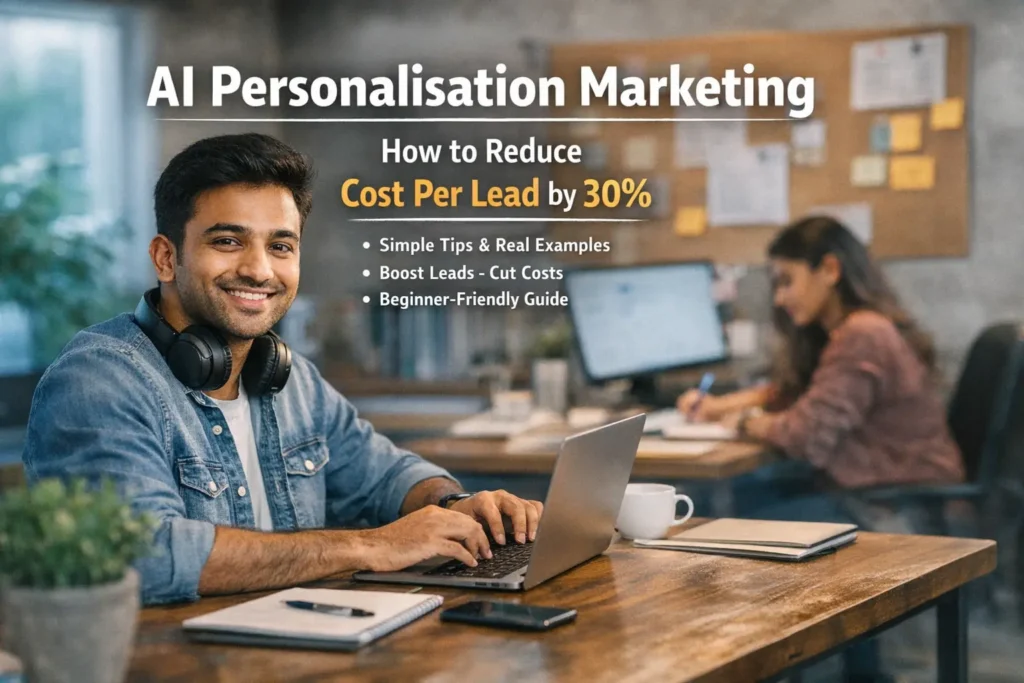
AI personalisation marketing means showing the right message to the right person at the right time automatically.
Instead of sending the same ad to everyone:
- AI studies what people do
- What they click
- What they buy
- What they ignore
Then it changes the message for each person.
It’s like having a smart helper who understands every customer.
Why is CPL important?
CPL means Cost Per Lead
It tells you how much money you spend to get one customer interested.
Example:
- You spend ₹50,000 on ads
- You get 500 people interested
Your CPL = ₹100
Now imagine this:
- CPL becomes ₹70
- Same ₹50,000 budget
You get 700+ people instead of 500
That means:
 Same money More customers
This is what AI personalisation helps you do.
How does AI personalisation work?
Don’t worry—no technical knowledge needed
1. It watches what people do
AI looks at actions, not just age or city.
Example:
- Did someone visit your website many times?
- Did they open emails but not click?
AI notices everything.
2. It groups similar people
AI personalisation marketing makes groups like:
- People who only browse
- People who buy regularly
Each group gets different messages.
3. AI personalisation marketing shows the right content
AI automatically sends:
- Ads
- Website messages
- Chatbot replies
No need to do it manually every time.
4. It keeps learning
Every click teaches AI something new.
Over time:
- Ads become better
- Results improve
- Cost reduces
Real-life examples
Netflix
When you open Netflix, everything looks different for you.
- Shows
- Images
- Suggestions
All based on what you watch.
Amazon
Customers also bought section?
That is AI.
Amazon uses data to suggest what you might like next.
Small skincare brand
A skincare brand used AI emails:
- Suggested products based on skin type
- Looked at past purchases
Result in 60 days:
- CPL reduced by 28%
- Email opens increased by 40%
No extra spending-just smarter marketing.
How to start (even if you’re a beginner)
You don’t need a big team or coding skills.
1. Start with emails
Use tools like:
- Klaviyo
- HubSpot
They can:
- Change subject lines
- Suggest products
- Send emails at the best time
2. Use dynamic ads
Platforms like:
- Facebook / Instagram
- Google Ads
Show different ads to different people automatically.
3. Add a chatbot
Tools like:
- Tidio
- Intercom
Show different messages based on what page user visits.
4. Personalise landing pages
Tools like Unbounce:
Change headline based on where user came from
(Google, Instagram, Email)
5. Use real data
Tools like:
- Google Analytics
- Hotjar
Show what users actually do on your website.
Use that data instead of guessing.
Important things to be careful about
Don’t make it creepy
There is a limit.
Good: We recommend this for you Bad: We know everything about you
Follow privacy rules
In India, follow data laws.
Always take permission before collecting data.
Don’t ignore campaigns
AI is smart, but still needs checking.
Review monthly Update content Improve strategy
Conclusion
Marketing has always been about understanding people.
AI just makes it:
- Faster
- Smarter
- More accurate
AI personalisation is not only for big companies.
Anyone can use it today.
Start small:
- Try personalised emails
- Use dynamic ads
Then improve step by step.
A 30% reduction in cost is not magic.
It happens when you stop guessing and start understanding your customers